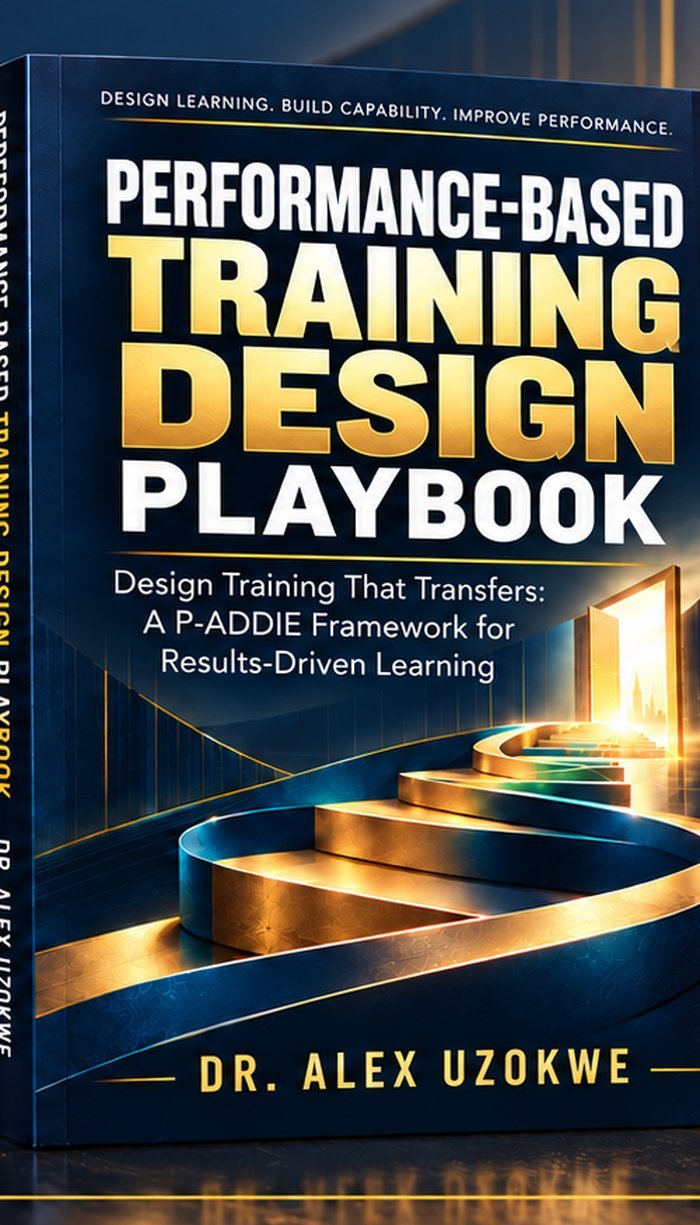
A
Phase 1Analysis
Diagnose before you design
Analysis is not a checkbox. It is a diagnosis: what is currently happening, what should be happening, why the gap exists, and whether training can actually close it.
The Performance-Based Training Design Playbook · Out now on Amazon
P-ADDIE does not replace ADDIE. It reorients it. The P stands for Performance, and it commits every phase — analysis through evaluation — to a specific, measurable performance outcome. The difference is not in the phases. It is in the questions those phases are designed to answer.
The method
Instead of asking “what do we need to teach?”, it asks “what do people need to be able to do?”
Observable, measurable behavior that produces a specified result in a defined context.
P-ADDIE does not replace ADDIE. It reorients it. The difference is not in the phases — it is in the questions those phases are designed to answer.
Diagnose before you design
Analysis is not a checkbox. It is a diagnosis: what is currently happening, what should be happening, why the gap exists, and whether training can actually close it.
Build the blueprint
Design begins with performance objectives in behavioral terms, then criterion-based assessment — before any content exists. You design the test before you design the lesson.
Build what the blueprint calls for
Storyboarding, content writing, media production, job aids, and technology. Development is constrained by the blueprint: subject experts own accuracy, designers own the learning architecture.
Activate the transfer system
Implementation extends well beyond delivery — briefing managers on how to support transfer, preparing the environment so the tools and chances to practise exist, and priming learners before session one.
Measure what matters
Anchored to Kirkpatrick's four levels — reaction, learning, behavior, results. The evaluation plan is built during Design, not bolted on after delivery, so the right data is collected at the right time.
The library
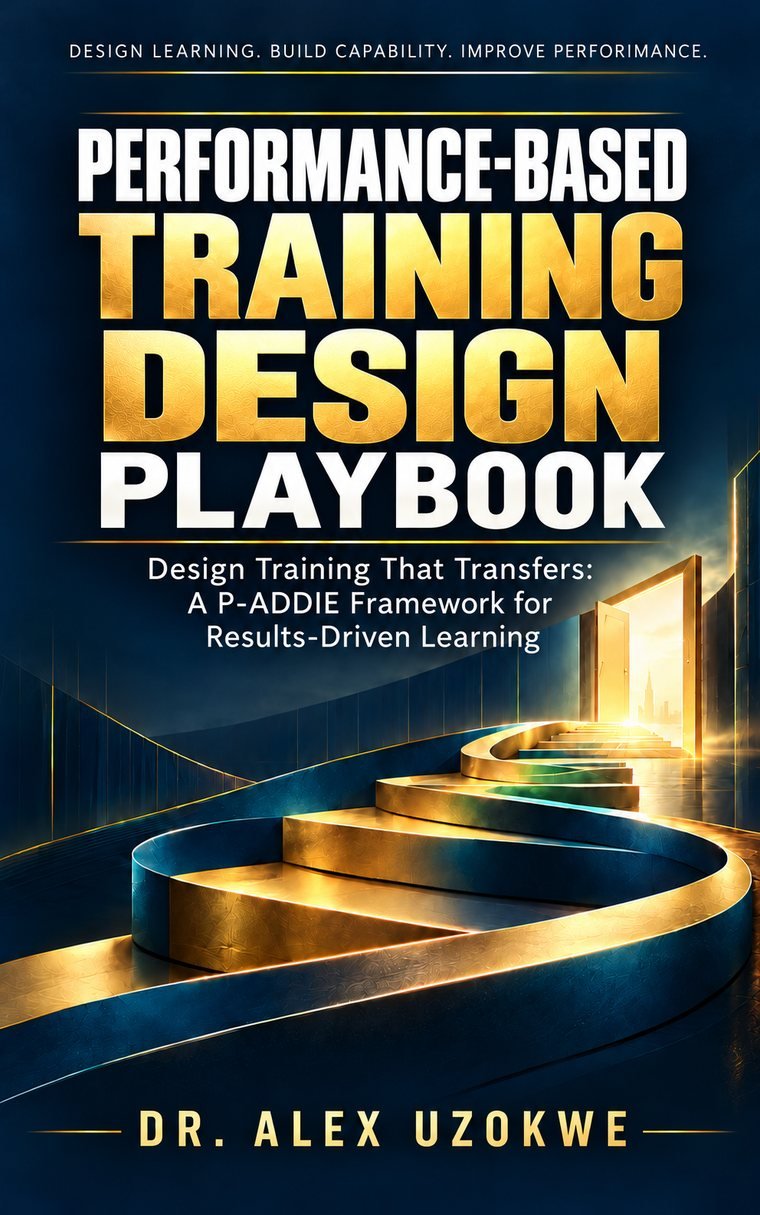
Design Training That Transfers: A P-ADDIE Framework for Results-Driven Learning
One live day, then thirty days in the portal
Look inside
Fourteen chapters across five parts, moving from why training fails to how you measure the return on it.
The complete P-ADDIE method, start to finish — from the performance objective through analysis, design, development, and delivery, to an evaluation report that holds up in a budget meeting. Written for practitioners working alone or leading a small team.
1. Why Training Fails: The Activity Trap · 2. The P-ADDIE Model: A Performance-Centered Framework · 3. Writing Performance Objectives That Drive Results
4. Needs Analysis: Finding the Real Gap · 5. Criterion-Based Assessment Design
6. Instructional Sequencing: Building the Learning Architecture · 7. Learning Strategies: Matching Methods to Objectives · 8. Developing Content That Teaches · 9. Job Aids: When Not to Train
10. Designing for Digital Delivery · 11. Facilitation as Performance
12. Evaluating Training Impact · 13. Making Learning Stick · 14. Measuring the Return on Learning Investment
Appendix: P-ADDIE Quick Reference & Key Frameworks · About the Author · References
Who it's for
Training that changes what people can do — not just what they know.
Course design that survives accreditation review and still teaches.
Translating military training discipline into civilian L&D practice.
Structure for people who already know the content but not the method.
Curriculum built for formation, not just information.
Compliance and onboarding programmes that can prove their value.
About the author
Purchase
Titles still in production are listed for information only — there is nothing to pay and nothing to download until they are released. Institutional purchase orders are welcome on anything available.
Newsletter
Chapter extracts, templates, and the occasional proverb. No launch barrage. Unsubscribe in one click.
Contact
Questions about the book, the Studio, or working with Ascender on a programme of your own. Messages are answered within one business day.